Anthology or Continuing Cast: Choosing What Carries Through a Series
Anthology or continuing cast shapes what viewers carry between episodes. Compare character, setting, and story continuity to choose a format that fits your material.
A viewer opens a mystery episode during a train ride and meets a new detective, town, and case before the next stop. In another series, the detective is familiar, and a brief exchange hints at a choice made several episodes earlier. The difference between an anthology and a continuing-cast series is not simply who returns; it is what the story asks viewers to remember.
Audience expectations
An anthology renews much of its story arrangement between installments. It may keep a theme, setting, genre, or visual style while introducing new characters and conflicts. Viewers can expect a distinct encounter, often with a local resolution, rather than a required visit with the same people.
A continuing-cast series makes recurrence part of the pleasure. Characters bring forward their histories, habits, relationships, and unfinished decisions. An episode can resolve its immediate problem while changing how viewers understand an earlier scene.
These formats also differ in how they deliver context. An anthology episode usually needs to establish its situation promptly. A continuing series can rely on shared knowledge, but scenes still need enough cues for viewers to understand the current conflict without decoding every past event.
What carries over
Every series has a continuity pattern: the elements that remain stable or change from one installment to the next. An anthology might replace its cast and plot while keeping a place, recurring question, or tone. A continuing-cast series might change the weekly problem while preserving characters and the consequences of their choices.
That distinction need not be absolute. A mystery series can keep a central investigator and introduce a new case each episode. An anthology can return to a character or location. The useful question is how much significance the audience should attach to each return: is it a familiar frame, or a promise that earlier choices will shape what happens next?
Writers can make the pattern legible through openings, recurring locations, or shifts in presentation. A familiar room can signal that relationships are continuing; a new cast and setting can tell viewers to learn a fresh set of rules. These cues work best when they match what the episode actually carries forward.
Character and consequence
An anthology can concentrate on a character’s decisive moment. With less backstory to establish, the episode must make a want, pressure, and choice clear through the present action. A continuing cast can spread change across episodes, allowing progress to be partial: someone may become more candid at work while remaining guarded with family.
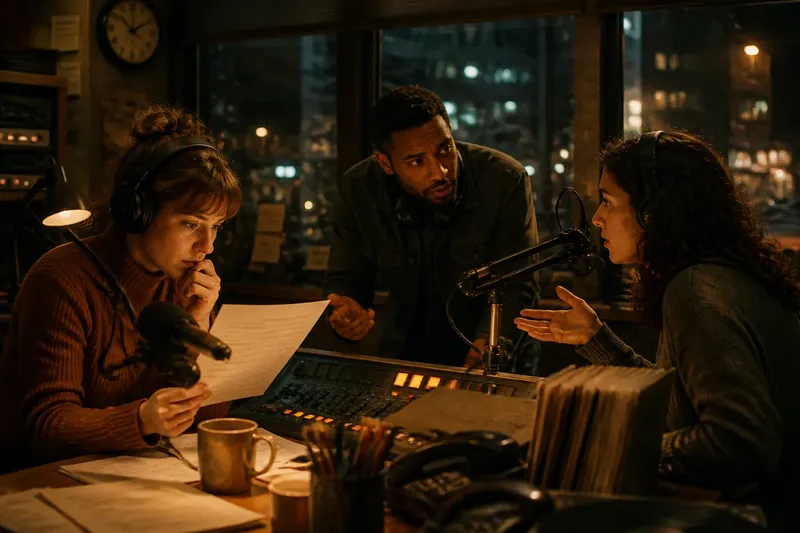
Consider an invented series about a night-shift team at a small radio station. In the anthology version, a temporary host receives an anonymous confession and decides not to air it; the broadcast continues without exposing the caller, and that episode closes on the host’s choice. In the continuing-cast version, the regular producer makes the same decision, then later asks a colleague to trust them with sensitive material. The first version ends with an immediate consequence; the second makes the choice part of a changing relationship.
For a continuing ensemble, a useful scene question is: what can a character do differently now because of what happened before? If the answer is nothing, the history may be decorative. For an anthology, ask whether a viewer can grasp the character’s change from the episode’s own actions, rather than from an explanation that arrives too late.
Different kinds of surprise
An anthology can surprise by replacing its central ingredients. A new cast, setting, or point of view can alter the genre or emotional register while a shared theme keeps the series recognizable. If that connective thread is too faint, each installment may feel like a separate program rather than another expression of the same idea.
A continuing cast can surprise by changing the meaning of familiar things. An old promise can become costly, or a shared workplace can feel different after colleagues stop trusting one another. The risk is accumulation: developments lose force when they add history without changing relationships, choices, or the audience’s understanding.
In either format, a surprise should revise what viewers think is happening, not merely introduce unfamiliar information. A recurring object, a character’s established habit, or a well-known location can make a shift easier to read.
Choosing a series shape
An anthology often fits material built around distinct situations: a self-contained dilemma, a local mystery, or a portrait of a particular community. A continuing cast often fits stories driven by shared work, relationships, or consequences that need time to develop. Neither form owns a particular genre; the deciding factor is what makes another episode feel necessary.
Before settling on a format, identify the element that should change and the element that should accumulate. Then ask what a viewer needs to remember for the next installment to feel more meaningful than a repeat.
- Story engine: If each installment has a new central dilemma, then consider an anthology; if the main conflict grows from ongoing relationships, then consider a continuing cast.
- Character history: If a character’s past choices must shape later scenes, then keep that character in the continuing ensemble; otherwise, let each anthology story establish the history it needs.
- Setting: If one location creates the recurring pressure, then retain it as a stable frame; if each place changes the story’s central question, then use new settings and provide a clear thematic link.
- Episode closure: If the central problem can end within one installment, then give it a local resolution; if its consequences should drive later episodes, then leave a specific change active.
- Audience memory: If viewers need to recall earlier promises or losses, then build clear reminders into scenes; if each story should stand on its own, then supply the necessary context within that installment.
- Variety: If the appeal depends on changing tone or point of view, then make the anthology’s shared identity visible; if variation should come from watching familiar people respond differently, then preserve the cast and alter the pressure.
Say you are outlining an invented radio-station drama and have three planned stories: a host faces a caller’s confession, a producer and colleague dispute a late-night schedule, and the station decides whether to cancel a community program. First, note that the confession can close within one broadcast, while the schedule dispute and cancellation affect the same working relationships. Next, choose the recurring station and ensemble as the series frame, then give the confession its own beginning and resolution while letting the other two stories leave visible consequences. The result is a continuing-cast series with a self-contained episode inside it; the tradeoff is that viewers can follow the broadcast dilemma alone, but they will get more from the workplace conflict if they remember earlier tensions.
Questions about series shape?
Can an anthology include recurring characters?
Yes. An anthology can revisit a character or place while giving each installment a distinct center and some closure. The more those returns affect later events, the more viewers will expect continuity to matter.
Can a continuing-cast series work out of order?
It can, especially when each episode has a clear local story. Viewers may still miss the weight of a relationship or consequence, so make essential context visible in the episode rather than relying on an unexplained reference.
What holds an anthology together?
A shared theme, tone, place, visual language, or kind of dilemma can connect separate stories. Give viewers a recognizable link so a new cast feels like part of the same series rather than an unrelated program.
Which format suits gradual character growth?
A continuing cast offers room to show change across relationships and situations. An anthology can make a brief transformation vivid, but it usually gives that character less space to develop across installments.
Memory as the guide
When weighing anthology or continuing cast, decide what the audience should carry between episodes. If the strongest material is a succession of distinct situations, let the cast and premise refresh while a clear thread connects them. If the strongest material is what people do to one another over time, keep their shared history active and show how each choice changes the next encounter.
That decision can also shape recaps, episode openings, and scene transitions: remind viewers of the details that alter the present conflict, and leave out history that does not. Memory becomes useful when the story gives it a job.